What’s New in Amateur Radio for 2026?
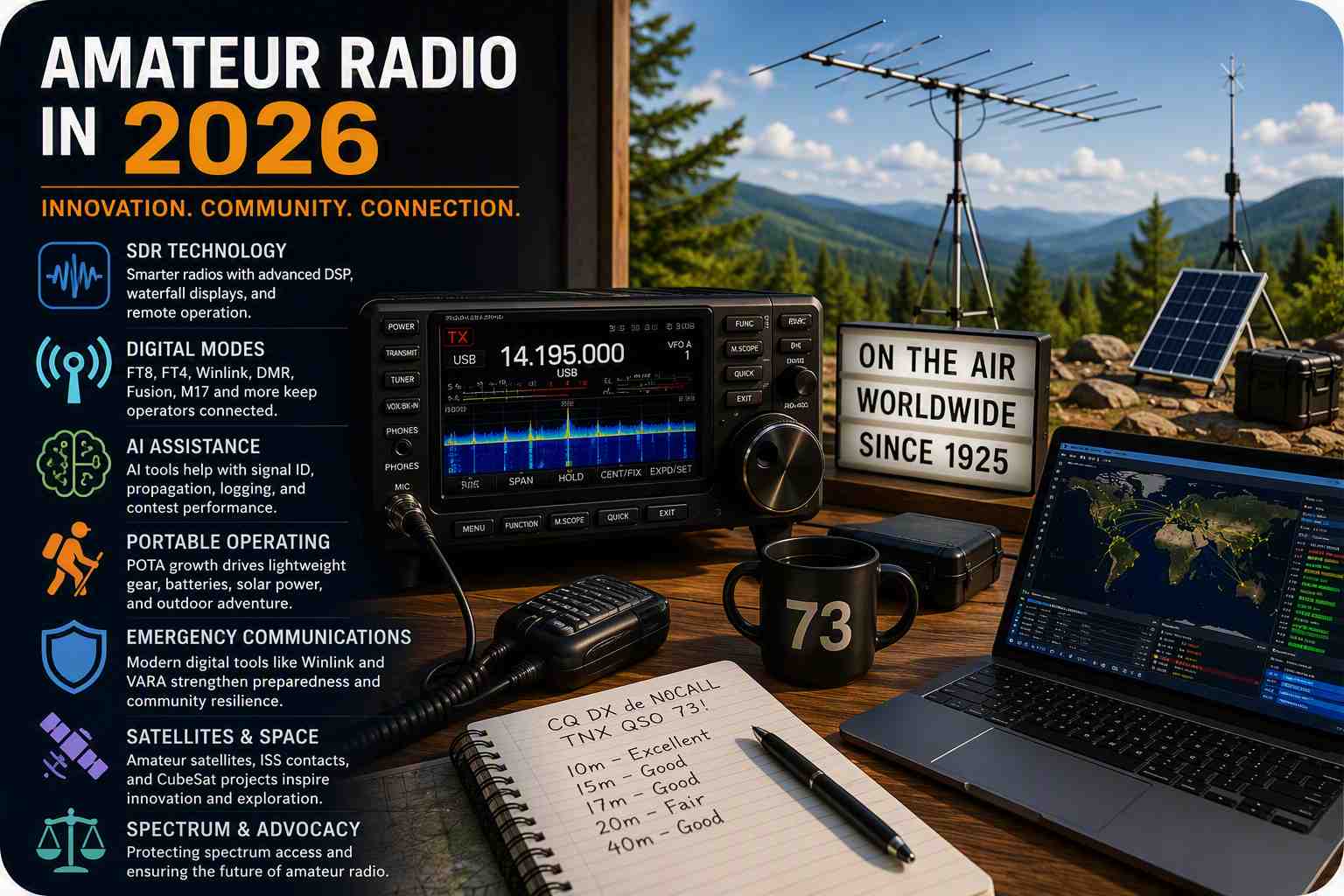
Amateur radio continues to evolve in 2026, blending traditional operating practices with modern digital technology. From advanced software-defined radios to artificial intelligence and portable operating trends, the hobby is experiencing significant changes that are attracting both new and experienced operators.
Software Defined Radios Become the Standard
Software Defined Radio (SDR) technology has become the foundation of many modern amateur radio stations. New transceivers feature integrated waterfall displays, advanced digital signal processing, remote operation capabilities, and firmware-based enhancements that allow operators to gain new features through software updates rather than hardware replacements.
The result is a more flexible operating experience with better receiver performance, improved filtering, and greater adaptability to future technologies.
Digital Modes Continue to Grow
Digital communications remain one of the fastest-growing areas of amateur radio. Popular modes such as FT8, FT4, Winlink, and VarAC are seeing increasing adoption among operators worldwide. Digital voice technologies including DMR, Yaesu System Fusion, and the open-source M17 project continue to expand their user bases and infrastructure.
Many amateur radio clubs now use digital modes as an introduction to HF operation for newly licensed operators.
Artificial Intelligence Arrives in the Radio Shack
Artificial intelligence is beginning to make its way into amateur radio applications. Operators are using AI-assisted tools for signal identification, propagation analysis, contest support, log management, and station monitoring.
While AI is not replacing operator skill and experience, it is becoming another useful tool that can enhance efficiency and improve operating performance.
Portable Operating Remains Extremely Popular
Parks on the Air (POTA) continues to drive interest in portable radio operation. Lightweight transceivers, compact antennas, solar charging systems, and high-capacity battery technology have made it easier than ever to operate from parks, remote locations, and temporary field stations.
Many operators are discovering HF radio through portable activities, creating new opportunities for experimentation and outdoor operating.
Modern Emergency Communications
Emergency communications organizations are increasingly combining traditional voice communications with digital messaging systems. Technologies such as Winlink and VARA enable operators to send emails and structured forms over radio networks even when internet connectivity is unavailable.
Portable communications kits, power resilience, and interoperability with emergency management agencies remain key areas of focus throughout 2026.
Continued Interest in Satellites and Space Communications
Amateur satellites, International Space Station contacts, and CubeSat projects continue to inspire operators interested in space communications. Advancements in satellite technology have expanded opportunities for experimentation and education.
At the same time, the amateur radio community remains engaged in discussions about spectrum management and potential interference issues associated with large commercial satellite constellations.
Regulatory Developments and Spectrum Protection
One of the most closely watched topics in 2026 involves the 23-centimeter band and its coexistence with Global Navigation Satellite Systems (GNSS). Amateur radio organizations and regulators continue to evaluate approaches that protect critical navigation services while preserving amateur access to valuable spectrum.
Operators should stay informed about national and international regulatory developments affecting VHF and microwave operations.
Solar Cycle 25 Still Provides Excellent Conditions
Although Solar Cycle 25 is gradually moving beyond its peak, HF operators continue to enjoy strong band conditions. Excellent openings on 10, 12, 15, and 17 meters are providing worldwide DX opportunities and encouraging activity across all license classes.
For many amateurs, current propagation conditions are among the most enjoyable experienced in years.
Looking Ahead
The biggest trends shaping amateur radio in 2026 include SDR technology, expanding digital modes, AI-assisted operating, portable field activities, and modern emergency communications. As technology advances and new operators enter the hobby, amateur radio continues to demonstrate its ability to adapt while preserving the experimentation, learning, and community spirit that have defined it for generations.
73’s From the MRC91 editorial desk.
Comments are closed